Why Your Mobile Hamburger Menu Keeps Breaking (One Button, Three Root Causes)
A hamburger menu that works on the home page but dies on other pages is rarely one bug. Here's the HTML/JS/CSS consistency trap behind it, three real fixes with commit snippets, and the viewport meta gotcha that silently kills mobile breakpoints.
More in Build Notes
- Why Real-Time Meeting Q&A Isn't Shippable Yet (and the Human-in-the-Loop System That Is)
- Mobile-First Playground: Making an Astrology Grid Actually Work on a Phone (And Go Viral While Doing It)
- How I Fixed AI Over-correction
- Why "Just Proxy /blog" Fails Across Cloudflare Pages and Vercel (and What Works Instead)
- The i18n + SEO Cleanup Chronicles: Canonical Chaos, hreflang Therapy, and Other Adventures
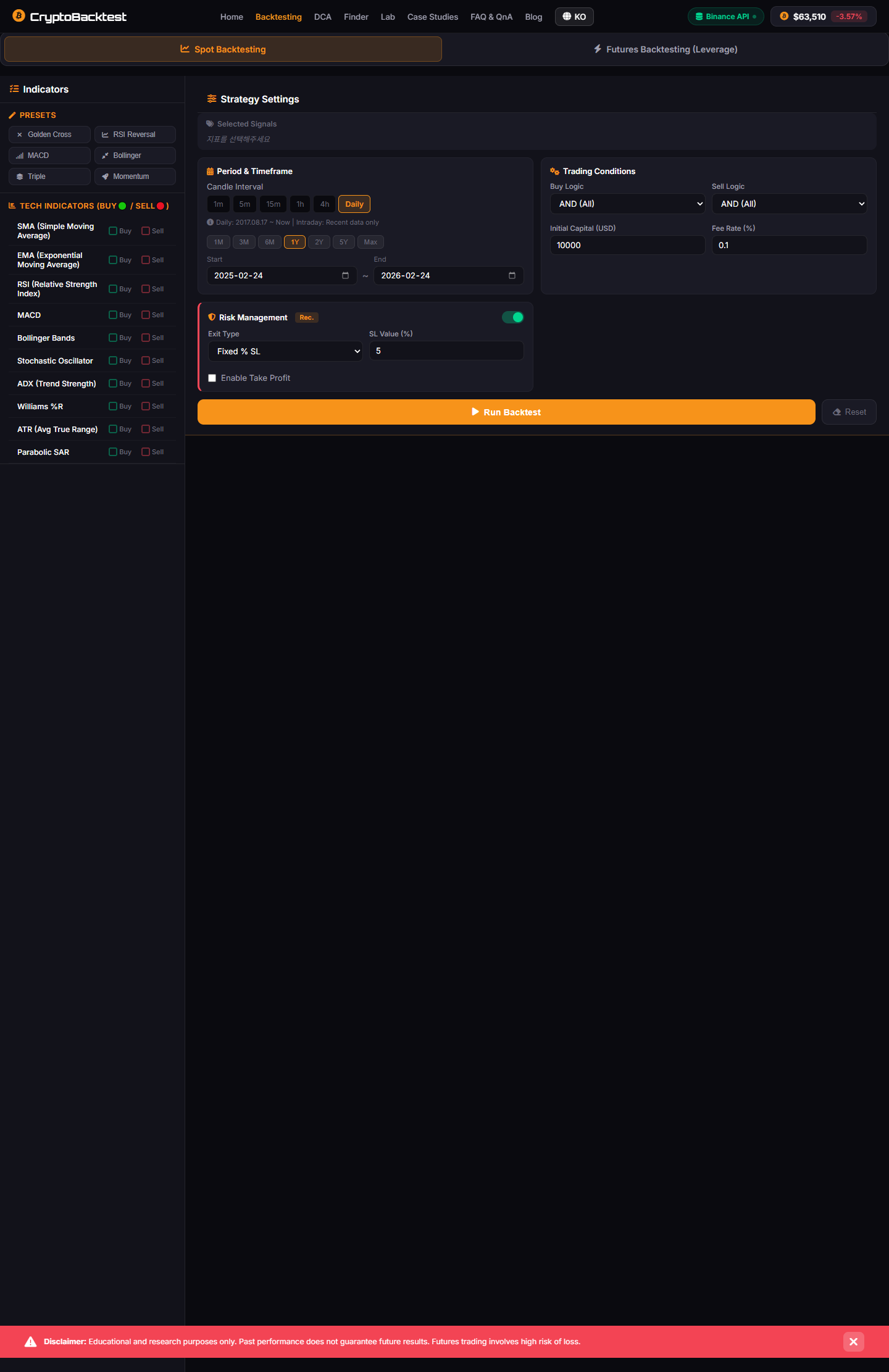
Your mobile hamburger menu works fine on the home page. Then someone opens a different page on their phone and the menu is just... gone. You fix it, and it breaks again — on yet another page. If that loop sounds familiar: it's rarely one bug. It's usually three separate failure modes wearing the same trench coat — JS toggle logic that isn't on every page, CSS state that isn't consistently applied, and hamburger HTML that's flat-out missing.
This post walks through all three with the actual commits, plus the viewport meta tag gotcha that can silently disable every mobile breakpoint you wrote — and what to put in place so the bug stops coming back.
Real example: everything below comes from CryptoBacktest, my multi-page static site, where a single tiny hamburger button consumed three commits in one day and a non-trivial portion of my sanity.
📺 The Three-Bug Timeline (Yes, There Were Episodes)
The timeline:
0b5c0fe(2026-02-17): top tab + mobile menu functionality pass8ee6bab(2026-02-17): mobile hamburger still broken on specific pagesf472d14(2026-02-17): missing hamburger HTML on mobile
If this sounds repetitive, that's because it was.
🔍 Root Cause Pattern
We didn't have one bug. We had a class of consistency bugs:
- JS toggle logic existed, but not uniformly
- CSS states existed, but not consistently applied
- Some pages were missing required HTML nodes
Each local fix looked correct inside its file, but globally the system remained fragile.
⚙️ The Actual Toggle Logic We Added
From 0b5c0fe (js/app.js):
const mobileMenuBtn = document.getElementById('mobile-menu-btn');
const navLinks = document.querySelector('.nav-links');

if (mobileMenuBtn && navLinks) {
  mobileMenuBtn.addEventListener('click', () => {
    navLinks.classList.toggle('mobile-open');
  });

  document.addEventListener('click', (e) => {
    if (!mobileMenuBtn.contains(e.target) && !navLinks.contains(e.target)) {
      navLinks.classList.remove('mobile-open');
    }
  });
}
Nothing exotic. Just normal, reasonable UI behavior.
And still, we had breakage. Why? Because behavior logic is only half the contract.
🎨 The CSS State Styling We Were Missing
Here's the CSS that should have been consistently applied across all pages (from 8ee6bab):
/* Mobile menu container base state */
.nav-links {
  display: flex;
  flex-direction: column;
  position: absolute;
  top: 60px;
  right: 0;
  background-color: #fff;
  border: 1px solid #e0e0e0;
  border-radius: 4px;

  /* Default: hidden on mobile */
  max-height: 0;
  overflow: hidden;
  opacity: 0;
  transition: max-height 0.3s ease, opacity 0.2s ease;
  z-index: 1000;
}

/* Active/open state — toggled by .mobile-open class */
.nav-links.mobile-open {
  max-height: 500px;
  opacity: 1;
}

/* Hamburger button styling */
#mobile-menu-btn {
  background: none;
  border: none;
  cursor: pointer;
  padding: 8px;
  display: none; /* hidden on desktop */
}

/* Show hamburger only below 768px breakpoint */
@media (max-width: 768px) {
  #mobile-menu-btn {
    display: block;
  }

  .nav-links {
    flex-direction: column;
    gap: 0;
  }

  .nav-links a {
    padding: 12px 16px;
    border-bottom: 1px solid #f0f0f0;
  }
}

/* Tablet breakpoint — slightly larger spacing */
@media (max-width: 1024px) and (min-width: 769px) {
  #mobile-menu-btn {
    display: none; /* revert to desktop layout */
  }

  .nav-links {
    position: static;
    flex-direction: row;
    max-height: auto;
    opacity: 1;
  }
}
The problem? Not all pages had this exact CSS block. Some inherited it, some had stale versions, some had nothing.
Result: the toggle logic would fire, the class would get added, but the CSS state change never happened. Users saw no menu appear.
🚨 The Missing HTML Problem
In f472d14, the fix was embarrassingly simple:
- some pages literally did not include the hamburger button HTML block
The diff between pages that worked vs. pages that broke:
<!-- Working page (home): -->
+ <button id="mobile-menu-btn" aria-label="Menu">
+   <span class="hamburger-icon">☰</span>
+ </button>
+ <nav class="nav-links">
+   <a href="/app">App</a>
+   <a href="/finder">Finder</a>
+ </nav>

<!-- Broken page (finder): -->
- <!-- button entirely missing! -->
- <!-- nav-links div present but orphaned -->
  <nav class="nav-links">
    <a href="/app">App</a>
    <a href="/finder">Finder</a>
  </nav>
Meaning:
- JS listener setup ran
- queried element returned
null - UI did not expose menu entry at all
This is a perfect "works on my page" trap. The code can be correct and still fail if page structures drift.
🔗 Why This Bug Was Sticky
The navigation layer existed in many HTML files.
Any time you run multi-page static layouts without strict templating, you risk:
- structural drift
- stale copies
- one-file hotfixes that never propagate
📱 The Viewport Meta Tag Gotcha That Kills Mobile Breakpoints
While tracking down these issues, we almost overlooked something simple but critical on mobile:
<!-- Without this, mobile CSS queries won't fire correctly -->
<meta name="viewport" content="width=device-width, initial-scale=1.0">
If this line is missing or malformed (e.g., width=980px instead of width=device-width), your media queries for @media (max-width: 768px) will not trigger properly.
We found one test page missing this entirely. It had all the CSS media queries written correctly, but the browser was rendering at desktop width on mobile devices. The hamburger button never showed because max-width: 768px was evaluating against a 980px viewport.
The lesson: always validate your viewport meta tag on every page template. It's invisible, but it controls whether mobile breakpoints even work.
🔀 From the Outside vs. Inside
From the outside, it looks like one bug. From the inside, it's a distribution problem.
💡 The Triangle That Decides Whether Your Menu Works
I used to think UI bugs were mostly about "bad JS."
Now I think mobile UI bugs are often about this triangle:
- structure (HTML)
- behavior (JS)
- state styling (CSS)
If one side is inconsistent, the triangle collapses and your users get a broken menu.
✅ What Actually Reduced Repeat Incidents
Not perfect, but better:
- standardized nav structure across pages
- repeated toggle logic where needed
- added visual pass on multiple routes, not just home
- created a checklist: viewport meta tag, hamburger button HTML,
.mobile-openCSS state
And yes, that last one matters. Because bugs love pages no one manually tests at midnight.
🖼️ Screenshot Reality Check

The finder page is exactly where these bugs hide:
- complex layout
- enough content to distract you
- different scroll and viewport behavior
If nav works on home but fails here, users still call it broken.
🎯 Tangent (But Useful): Why This Is Actually Product Work
I know, this sounds like "just front-end bugfixing."
But from user perspective:
- if nav fails, trust drops
- if trust drops, strategy outputs feel less credible
- if outputs feel less credible, your core value is discounted
So yes, a hamburger button can impact perceived product quality way beyond navigation.
How to Prevent This Structurally
After the third bug, "structure drift" wasn't a satisfying diagnosis — it was a symptom. The real question is what to put in place so structure stops drifting. Here's what I added afterward:
1. Shared nav include. Every page in a multi-page static site should pull the navigation from a single source. In Next.js this is trivial (<Nav /> component), but for plain HTML or hybrid setups, even a simple nav.html partial included via build script (<!--#include-->, Eleventy partials, Astro components) prevents the "one page has the new markup, another page still has the old" problem. The drift can't happen if there's only one source.
2. Build-time nav consistency lint. A short script in CI: parse all rendered HTML, extract the nav block from each page, hash it, fail the build if hashes don't all match. Twenty lines of Node. This catches divergence before deploy. If you can't enforce a single include for legitimate reasons, at least enforce equality.
3. CSS state assertion test. A Playwright or Cypress smoke test that loads the page on a mobile viewport, clicks the hamburger, asserts the menu is visible and the burger icon shows the close state, clicks again, asserts back to original. Five-line test. Runs in two seconds. Would have caught bug #2 (CSS class state mismatch) immediately.
4. JS null-safety as a habit. document.getElementById('menu') returning null should be assumed, not surprising. If the script can run on pages that don't have the element, it must early-return. Better: add a one-line guard at the top of every page-specific script. Best: structure the JS so it only attaches to elements it expects to exist (delegate from a single root listener that's defensive about its targets).
5. Mobile viewport in dev, not just QA. I caught these bugs late because I was developing on desktop and only QA'd on mobile near deploy. Adding chrome --user-agent=mobile to my dev shortcut, or simply opening DevTools at iPhone 13 viewport by default, would have surfaced bug #1 (HTML omission) on the first reload.
The pattern across all three bugs is the same: a multi-page static site with hand-maintained navigation is a structure that requires automated assertions to stay correct. You can either upgrade the tooling (single-include, CI lint, smoke test) or accept that the next refactor will rediscover the same three-bug night.
⚔️ Takeaways from the Button Wars
Three things to remember before your own hamburger button starts collecting commits:
- A mobile menu is a three-sided contract — HTML structure, JS behavior, CSS state. If any side is missing on any page, that page's menu is broken, no matter how correct the other two sides are.
- Multi-page static sites drift by default. A centralized nav partial/template from day one plus a tiny e2e mobile smoke test on critical pages turns "the bug came back" into "the build failed" — the prevention section above has the full setup.
- Validate the viewport meta tag on every page template early. It's invisible, and it decides whether your mobile breakpoints fire at all.
Because the menu bug is never "just one bug." It is usually your architecture politely telling you to standardize before you add more features.
And yes, I still stare at hamburger buttons like they owe me money.
2026.02.17
Written by
Jay Lee
Korea-Licensed Pharmacist (#68652) · Senior Researcher
Korea University, College of Pharmacy (B.S. + M.S., drug delivery systems & industrial pharmacy). Building production-grade AI tools across medicine, finance, and productivity — without a CS degree. Domain expertise first, code second.
About the author →Related posts